
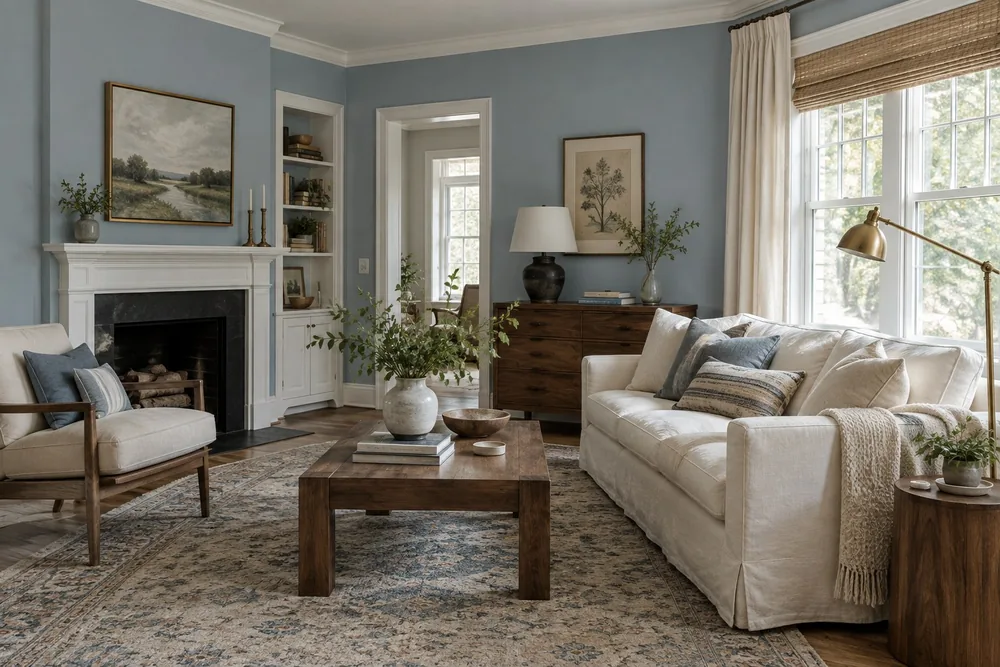
Start with the documented color character
Wythe Blue mixes blue, green and gray at a moderate depth. Temperature is a useful description, but neighboring materials can change the impression. Wythe Blue has more depth than Palladian Blue, giving its blue-green-gray mixture enough presence for a stronger painted feature.
Why the white counters and dark wood relationship matters
Dark wood can support the scheme, while a white countertop creates the sharper boundary that should be assessed before cabinet approval.
Wythe Blue has an LRV of 48.11; Benjamin Moore Palladian Blue HC-144 is 60.4. The difference is 12.29 points, with Palladian Blue returning more light under the reference measurement. Palladian Blue combines blue and green in a light, airy color. This supplies a named color control; the LRV gap alone does not identify the warmer, greener or pinker paint.
Use Palladian Blue as a control
Use a warmer and a cooler object already in the room to assess Wythe Blue, keeping their real proportions visible. The target is a coherent relationship with white counters and dark wood. Do not assume that every blue behaves alike or that all greens belong on the same side of a temperature label.
Separate a persistent cast from a comparison effect
Check the cabinet shadow before deciding whether the blue-green belongs on every door or only the island. The undertones and neighboring colors covers that related choice.
Keep, compare or change direction
Judge the temperature description against the full white counters and dark wood arrangement. A warm or cool label is a useful starting category; it cannot guarantee that Wythe Blue agrees with every material assigned the same label. The wood-floor pairing guide covers that related choice. Before ordering samples, compare room-planning features in the paint color visualizer roundup.
Sources & notes
Color specifications: Benjamin Moore Wythe Blue HC-143. The recorded LRV is 48.11. Named comparison values come from the respective manufacturers; material schemes are editorial suggestions.
This guide reviews published color information and proposes practical sample checks. It does not claim first-hand paint testing or customer-review scores. Benjamin Moore does not sponsor or endorse this site. Product names and trademarks belong to their respective owners. Confirm the color in a physical sample and select the coating for the actual surface and finish.